

Digital Transformation Strategy: What Zillennials Understand
I’ve been thinking a lot lately about how strange it was to grow up exactly when zillennials did.
For people who haven’t heard the term before, zillennials are the micro-generation born in the mid-to-late 90s between Millennials and Gen Z. We grew up alongside the rise of the internet, but we also clearly remember life before smartphones, social media, and algorithms completely changed the way people communicate and interact with the world. We remember both versions of the internet.
I don’t think people fully realize how much that shaped the way our generation sees technology. We remember when the internet still felt separate from real life. You logged on and logged off. Social media wasn’t tied to identity yet. Attention spans were different. Communication was slower. People weren’t constantly curating themselves online. Most industries still operated largely offline.
Then everything changed incredibly fast.
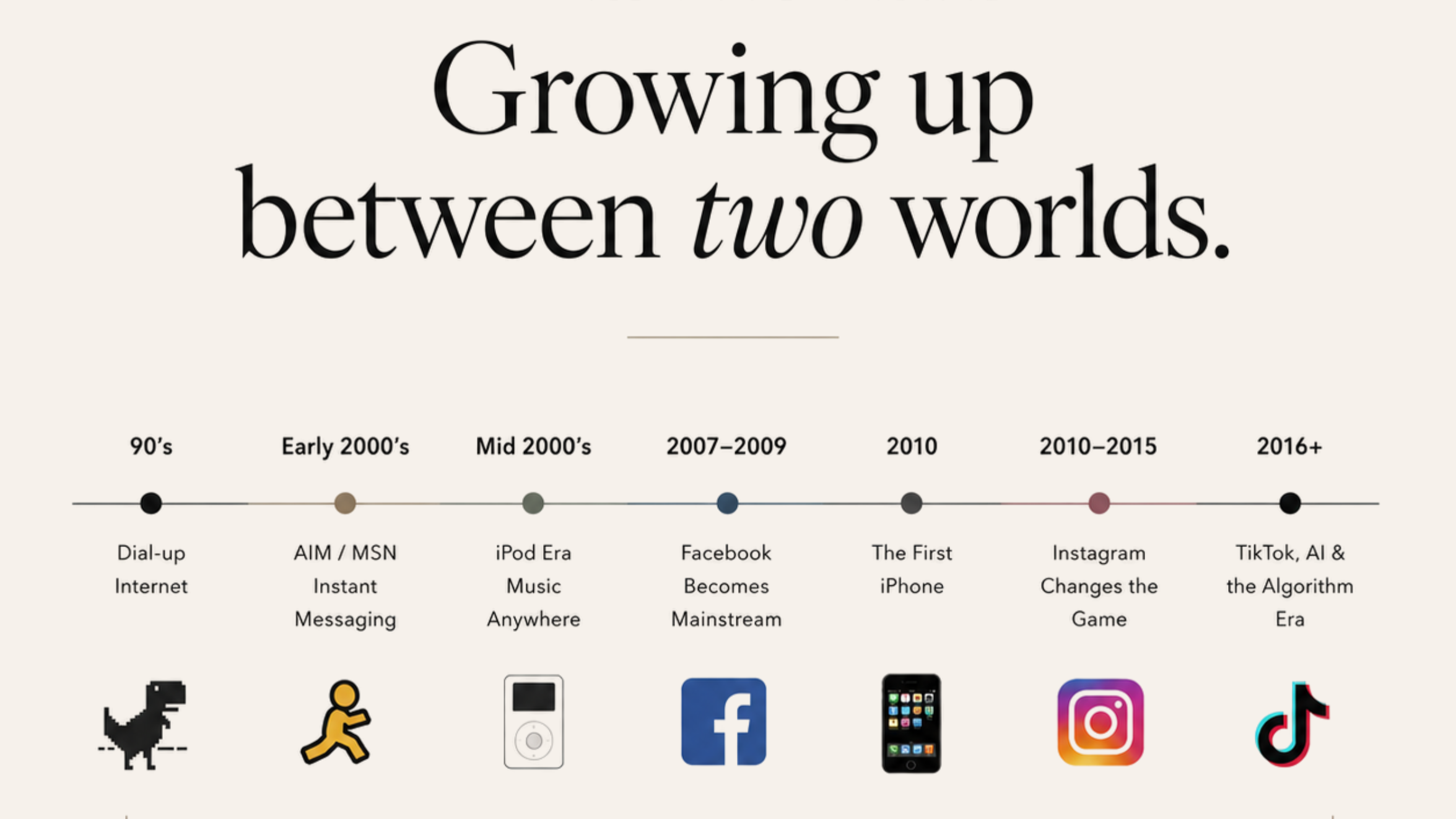
What’s interesting is that a lot of businesses are still trying to catch up to the behavioral side of that shift, not just the technological side. Digital transformation gets talked about like it’s mostly a systems or software conversation, but a huge part of it is actually about human behavior. Customer expectations changed. Communication changed. Decision-making changed. The speed of information changed. The relationship people have with brands changed.
A lot of leadership teams today built highly successful businesses before the digital world evolved into what it is now. Meanwhile, younger generations adapted alongside the internet in real time, so technology feels intuitive to them in a way that’s hard to fully explain unless you experienced that transition firsthand.
That gap creates a lot of the friction organizations are dealing with right now.
Honestly, a large part of modern consulting and strategy work comes down to helping businesses bridge those worlds. Not just implementing technology, but helping organizations align communication, operations, customer experience, and leadership thinking around how people actually behave today.
The companies that adapt best over the next decade probably won’t just be the ones with the most advanced technology. They’ll be the ones that understand how to create alignment between people, systems, communication, and rapidly evolving customer behavior.